


Victoria Saeki-Serna on Mexico and U.S. Power in the Americas in the Cold War
With the support of the Georgetown Americas Institute, Victoria Saeki Serna visited the Archivo Histórico Genaro Estrada de la Secretaria de Relaciones Exteriores in Mexico City.
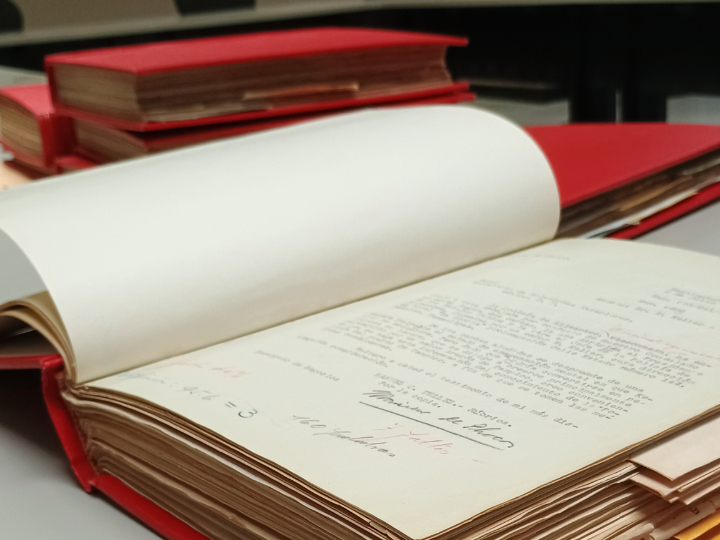
Planning for her dissertation, she searched for memorandums from the Mexican government detailing collaboration the United States on issues of political instability during the Cold War, looking both for where the countries agreed and diverged on the key issue. To do so, she examined the undigitized personal collections of former Ministers of Foreign Relations and Ambassadors to the United States such as Manuel Tello Baurraud, Antonio Carrillo Flores, and Hugo B. Margáin among many others.
To her surprise, she found more documents where Mexican government officials raised the alarm over leftist regime changes in the rest of Latin America. These memorandums underscored the realization that said regime changes would cause disturbances in U.S. – Latin American relations, and in tandem, changes in the U.S. – Mexico bilateral relationship. She also found that while it is traditionally known for its anti-interventionist stance, Mexico had conflicting positions on the creation of an interamerican military force, raising the question of what caused these changes.
This trip changed Victoria’s outlook on her dissertation, as it has now become evident that she should write more on this hemispheric dynamic when considering the bilateral relationship. As she continues to work on her dissertation, these findings will serve as the basis for an unforeseen, yet more nuanced, hemispheric angle to her analysis.