


Monday, November 16, 2026
4:00 p.m. - 5:00 p.m. EST
Location: Healey Family Student Center Herman Room
Monday, November 16, 2026
4:00 p.m. - 5:00 p.m. EST
Location: Healey Family Student Center Herman Room
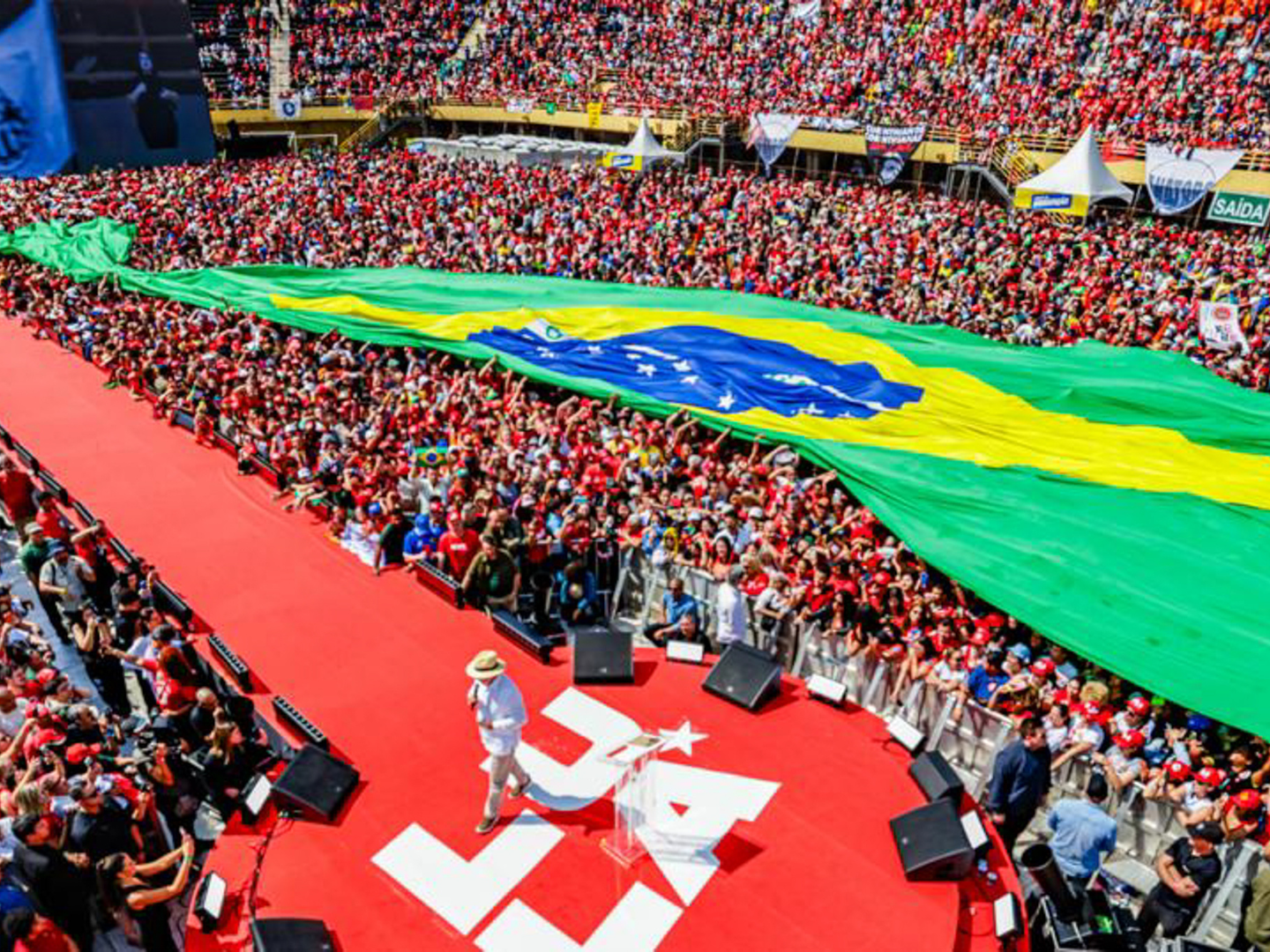
On October 25, Luiz Inácio Lula da Silva narrowly defeated Senator Flávio Bolsonaro in Brazil’s presidential runoff, winning roughly 51.8% of valid votes and an unprecedented fourth, non-consecutive term. When he takes office on January 5, 2027, President Lula will govern in a very different political environment from the one that defined his earlier terms. That environment is shaped by narrow electoral margins, entrenched polarization, a challenger who has disputed the outcome, and significant conservative gains in both the Chamber of Deputies and the Federal Senate.
These conditions will determine how much room the administration has to advance its agenda: protecting the social gains central to Lula’s political project. It must do this within strict fiscal limits and under mounting pressure to stabilize public debt. Abroad, Brazil will seek to balance its South-South agenda and maintain strategic partnerships with both Washington and Beijing, as rivalry between the two powers intensifies.
The Georgetown Americas Institute (GAI) is pleased to host a conversation moderated by Alejandro Werner, founding director of GAI, analyzing Lula’s historic reelection and the trade-offs that will define his next term. Fabio Kanczuk, ASA Investments, will examine Brazil’s macroeconomic outlook, its fiscal constraints, and the most pressing challenges facing the economic team from day one. Matias Spektor, Fundação Getulio Vargas, will assess the government’s domestic governing space and the direction of Brazilian foreign policy, with particular attention to relations with the United States and China. Together, the speakers will identify the economic, institutional, and diplomatic markers that will show where Brazil is heading through the end of the decade.
Matias Spektor is professor of politics and international relations at Fundação Getulio Vargas (FGV) in Brazil, where he founded the School of International Relations. He specializes in international security, climate politics, and transnational political violence, with a focus on Latin America and the Global South. He has been a visiting scholar at Georgetown University, Princeton University, the Carnegie Endowment for International Peace, the Council on Foreign Relations, the London School of Economics, and King’s College London. He holds a doctorate from the University of Oxford.
Fabio Kanczuk is head of macroeconomics at ASA Investments in São Paulo. He served as director of economic policy at the Central Bank of Brazil from 2019 to 2021, where he sat on the Monetary Policy Committee (Copom). Before that, he was secretary of economic policy at Brazil’s Ministry of Finance from 2016 to 2018. He then represented Brazil and a constituency of Latin American, Caribbean, and Asian countries as executive director at the World Bank. He holds a degree in electronic engineering from the Aeronautics Institute of Technology (ITA), a Ph.D. in economics from UCLA, and completed postdoctoral work at Harvard University.
Alejandro Werner is founding director of the Georgetown Americas Institute and a non-resident senior fellow at the Peterson Institute. He recently completed nearly nine years as director of the Western Hemisphere Department at the International Monetary Fund. Prior to that, he served as undersecretary of finance and public credit in Mexico's Finance Ministry and held several positions there and at the Central Bank. He holds a Ph.D. in economics from MIT and a B.A. in economics from ITAM.