


Tuesday, November 10, 2026
3:30 p.m. - 5:00 p.m. EST
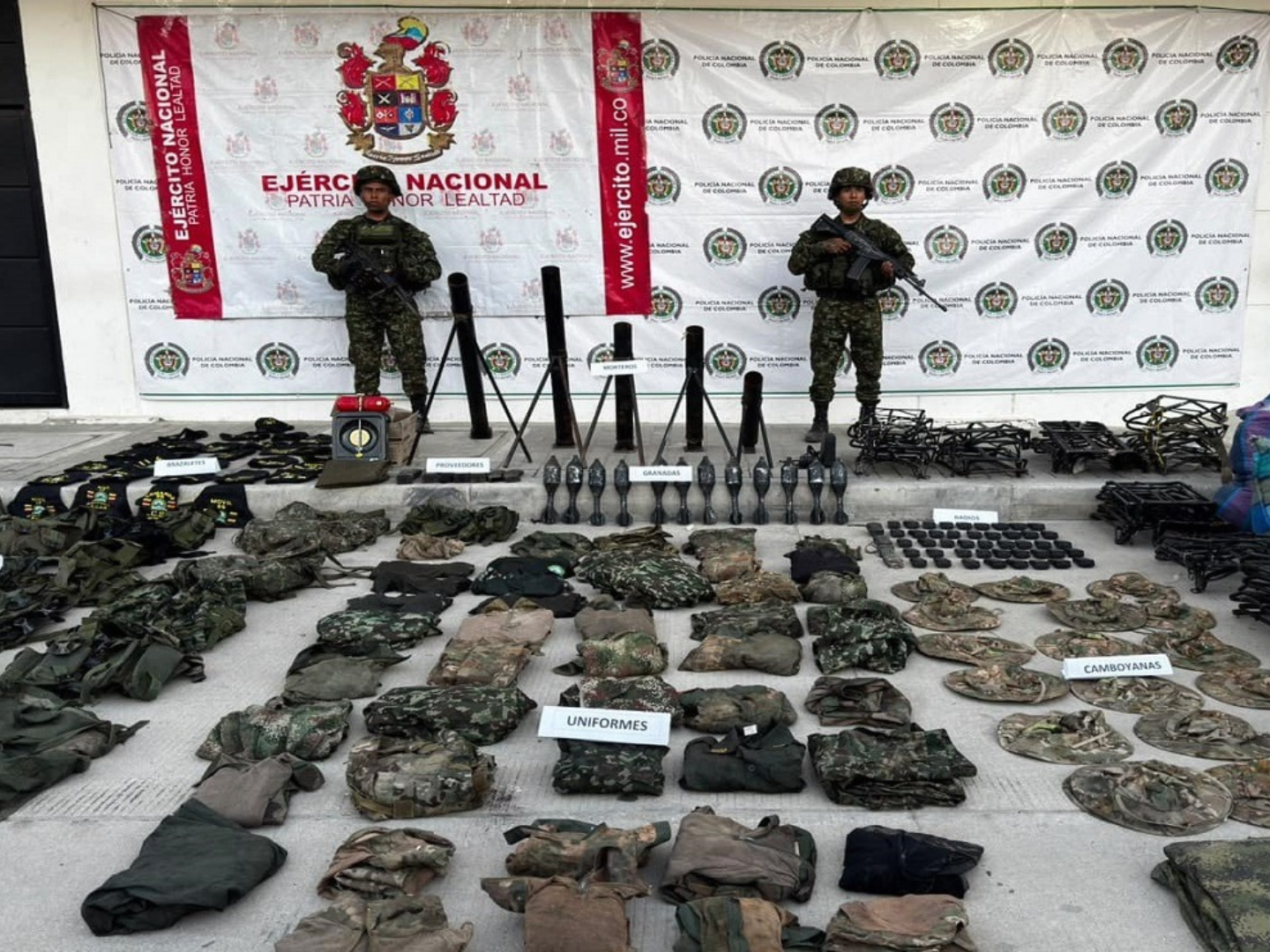
Ecuador, Venezuela, and Colombia face a complex security crisis. These countries are suffering from booming illegal economies such as drug trafficking, illegal mining, and industrial-scale extortion, which in turn feed into criminal gangs, terrorist groups, and corruption networks. At the same time, extra-hemispheric powers are looking to seize their natural resources and expand their influence. More recently, they have become the center of the Trump administration's efforts to disrupt criminal networks, prevent the penetration of hostile powers, and reassert U.S. predominance in the Western Hemisphere.
To discuss the security challenges of this critical region and the implications for the United States’ national security agenda, the Georgetown Americas Institute is pleased to host a panel featuring Rocío San Miguel, president of the NGO Control Ciudadano and an internationally renowned champion of democracy and transparency in Venezuela; General Alberto Mejía, former general commander of the Colombian Military Forces; Arturo Torres, an Ecuadorian investigative journalist specializing in organized crime and corruption; Daniel P. Erikson, former senior director for Western Hemisphere affairs at the U.S. National Security Council under the Biden administration; and Juan Cruz, former special assistant for the Western Hemisphere and top National Security Council advisor for the Americas during the first Trump administration. The panel will be moderated by GAI Visiting Fellow Román D. Ortiz.
This event will be held in English and Spanish. Simultaneous interpretation will be available in-person and virtually via Zoom. For in-person interpretation, guests are required to bring their own device and headphones to connect to Zoom.
Featuring
Juan Cruz is a national security specialist, hemispheric geopolitics strategist, and senior advisor at Dinámica Américas, where he counsels companies, philanthropies, and multilateral financial institutions to navigate evolving conditions in the Americas. Since 2019, he has served as a non-resident senior adviser to the Americas Program at the Center for Strategic and International Studies. Additionally, he serves as a Member of the Advisory Board of the Vandenberg Coalition and a Member of the Inter-American Dialogue’s Hemispheric Security Task Force, an international platform anchored on a dual approach that treats law enforcement and prevention equally. In 2026, he was also invited to become a Member of the Inter-American Dialogue by the Board of Directors. Since 2019, he serves as non-resident senior advisor to Center for Strategic and International Studies (CSIS) Americas Program. Currently, he also serves as an Advisory Board Member of the Vandenberg Coalition and a Member of the Inter-American Dialogue’s Hemispheric Security Task Force. From 2017 to 2019, Cruz worked with the National Security Council as the special assistant to the president and senior director for Western Hemisphere affairs. He drove interagency decisionmaking processes for the region and worked with international partners to foster shared understanding of key issues. He was instrumental in defining the administration’s approach to the Venezuelan crisis, the administration’s Cuba policy, and furthering the overall Western Hemisphere strategy. Cruz's professional career spans three decades as a public servant in the U.S. government. His deep understanding of the region was honed through overseas postings in Brazil, Colombia, Guatemala, Honduras, Mexico, Panama, Peru, and Venezuela. While in Colombia, Cruz fostered historic successes against drug cartels and guerrilla insurgencies. Throughout his government service, he has led teams to support, execute, and shape U.S. foreign policy and national security.
Daniel P. Erickson is the former deputy assistant secretary of defense for the Western Hemisphere at the U.S. Department of Defense. In this capacity, he served in the Office of the Secretary of Defense and is responsible for U.S. defense and security policy for the 34nation region that encompasses Canada, Mexico, Central America, the Caribbean, and South America. Erikson served as the Western Hemisphere policy lead for the Biden-Harris Transition. He previously served in the White House as special advisor to then-Vice President Joe Biden, where he covered foreign affairs and national security issues in the Americas. Prior to the White House, he served in the U.S. Department of State as senior advisor for congressional and intergovernmental affairs and senior advisor for Western Hemisphere affairs. In 2017, he received the State Department’s Superior Honor Award for his diplomatic contributions to U.S.-Latin American relations, including the advancement of bipartisan policies to support security and development in Central America and Colombia. In addition to his U.S. government experience, Erikson has held senior positions in the private sector, think-tanks, and academia. He has published widely on a range of topics in international and Latin American and Caribbean affairs and testified before the U.S. Congress. Erikson earned his Master in Public Policy at the Harvard Kennedy School and a B.A. in international relations from Brown University. He was a Fulbright Scholar in Mexico and is a member of the Council on Foreign Relations.
General Alberto Mejia served as commander of the Colombian Army and subsequently the Colombian Military Forces from 2015 to 2018. Over a distinguished military career spanning more than four decades, he specialized in irregular warfare and special operations, leading institutional reforms to modernize Colombia’s military, strengthen transparency, and align military doctrine with international standards and human rights principles. He also played a key role in Colombia’s peace process with the FARC, advising government negotiators and guiding the military through the organization’s disarmament, demobilization, and reintegration. From 2019 to 2021, Mejía served as Colombia’s ambassador to Australia and New Zealand. He subsequently worked as a consultant on military transformation and security sector reform for the United States Institute of Peace and held academic appointments at institutions in Australia and the United States. He currently serves as honorary president of the Australia-Colombia Business Council and visiting professor at the University of Los Andes in Bogotá. Mejía holds three master’s degrees in international security, strategic studies, and national security.
Rocío San Miguel is a lawyer and president of the NGO Control Ciudadano para la Seguridad, la Defensa y la Fuerza Armada Nacional (Citizen Oversight for Security, Defense, and the National Armed Forces). In the service of her Venezuela’s public administration, she has worked as an analyst and researcher for the National Security and Defense Council, legal consultant to the National Border Council, director general of the Office of the Ministry of Infrastructure, and associate advisor to the Center for Advanced Military Studies. She has served as a professor of international humanitarian law and human rights at the Naval War College, the Air War College, and the National Guard War College in Venezuela. She has also taught security studies at the Metropolitan University and at the Center for Postgraduate Studies within the Faculty of Legal and Political Sciences at the Central University of Venezuela, where she held a chair in the law of armed conflict. Following a period of imprisonment between 2024 and 2026—during which she was acquitted of all charges in October 2026—she is now focused on the process of reinstitutionalizing the security and defense sectors in Venezuela.
Arturo Torres is an Ecuadorian journalist. He is the co-founder and director of the digital media outlet Código Vidrio and has specialized for over 30 years in investigative reporting on organized crime, corruption, the environment, illegal mining, and justice. He exposed the first cases of corruption among Ecudadorian Supreme Court justices, an achievement for which he won the top prize for best investigative journalism in Latin America from the Press and Society Institute (IPYS) and Transparency International. He is a member of the International Consortium of Investigative Journalists (ICIJ). He was part of the team that investigated the Panama Papers, winning a Pulitzer Prize in 2017. In 2023, he was honored as an anti-corruption champion by the U.S. government. He participated in the ICIJ’s China Targets investigation—which examined China's persecution of thousands of dissidents worldwide—winning the Overseas Press Club of America award for best international human rights reporting. Also in 2024, he won an Overseas Press Club award for an investigation published with the Washington Post, for which he serves as an Ecuador-based contributor, regarding the global reach of the Albanian mafia. He is the co-author, with María Belén Arroyo, of the books El Juego del Camaleón (The Chameleon's Game)—covering FARC contacts in Ecuador—and Rehenes (Hostages), which investigates the murder of journalists from the newspaper El Comercio.
Roman D. Ortiz is visiting fellow at the Georgetown Americas Institute. He has over 25 years of experience as a scholar and senior consultant on Latin American security, defense, and geopolitics, including Russian and Chinese activities in the region, as well as low-level threats, such as insurgencies, terrorist organizations, and criminal groups. He is currently associate fellow with the International Institute for Strategic Studies and director of the Strategic Analysis and Consulting Group, a consulting firm that specializes in Latin American security and defense affairs. He has been a non-resident fellow at the Joint Special Operations University, the academic component of the US Special Operations Command (USSOCOM), and a senior consultant for the U.S. Institute of Peace. Ortiz has taught at the William J. Perry Center for Hemispheric Defense Studies at the National Defense University (Washington, DC), the Catholic University of America (Washington, DC), the Gutierrez Mellado University Institute (Madrid), and Los Andes University (Bogota). He earned a Ph.D. in political science (cum laude) from the Complutense University (Madrid). He also has an MBA from the Pontifical University of Comillas (Madrid) and a B.A. in political science from the Complutense University (Madrid).