


Tuesday, November 17, 2026
10:30 a.m. - 12:00 p.m. EST
Location: Copley Hall Formal Lounge
Event Series: GEO-LAC: Latin America in the New Geoeconomic Order
Tuesday, November 17, 2026
10:30 a.m. - 12:00 p.m. EST
Location: Copley Hall Formal Lounge
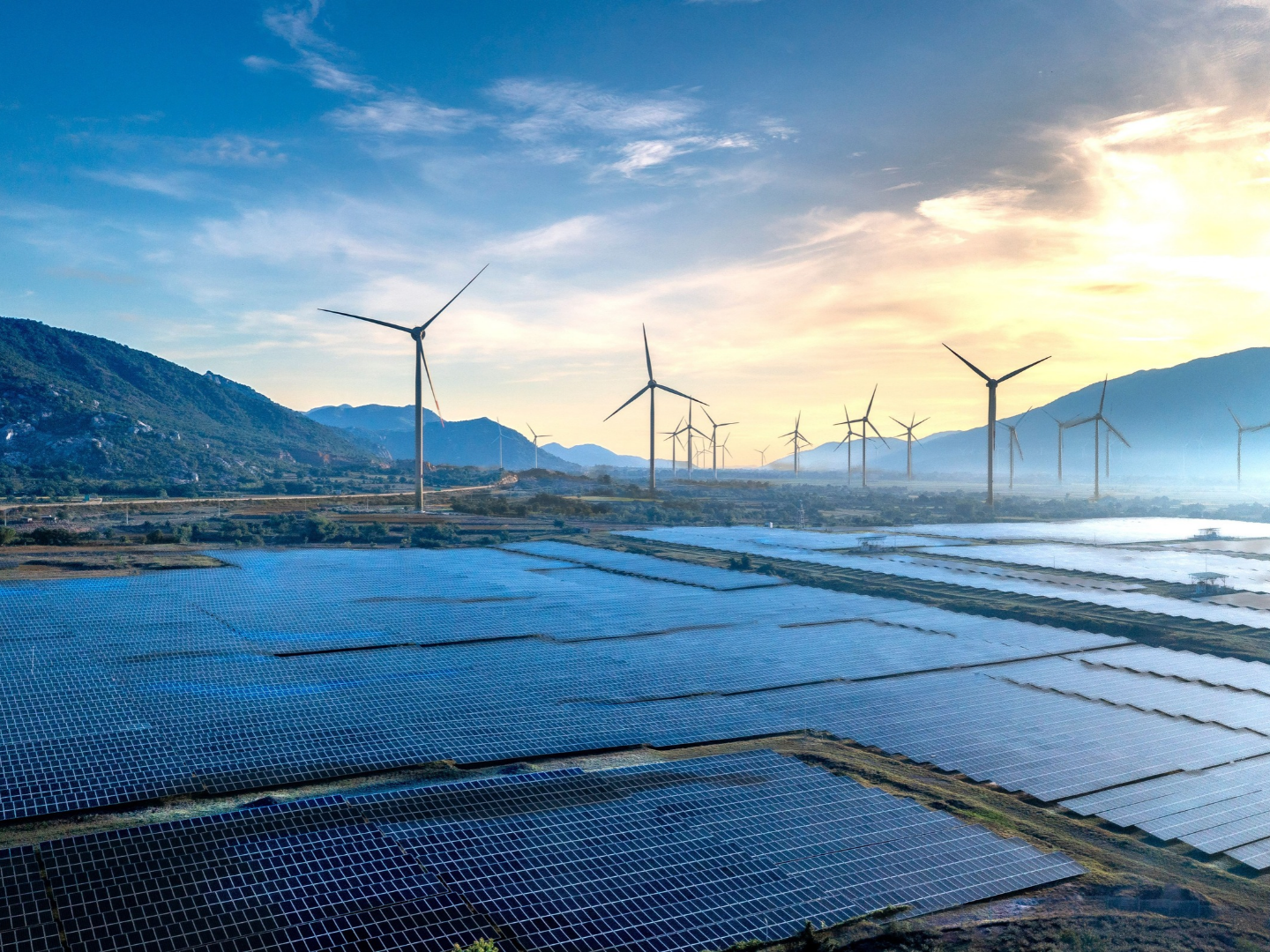
The global energy transition is reshaping the international political economy, creating new value chains around critical minerals, renewable energy, clean technologies, and advanced manufacturing. At the same time, geopolitical competition, industrial policies, economic security concerns, and efforts to diversify supply chains are transforming global patterns of trade and investment.
For Latin America and the Caribbean, these developments present significant opportunities, given the region’s abundant natural resources, renewable energy potential, and growing role in emerging energy value chains. The central challenge is how to translate these advantages into greater value creation through processing, manufacturing, technology, innovation, and stronger productive linkages, while advancing sustainable development.
Against this backdrop, the Georgetown Americas Institute and Latin American Energy Organization (OLACDE) will convene a discussion of the study “Global Value Chains in the Energy Transition amid a New Geopolitical Landscape” (Cadenas Globales de Valor en la Transición Energética ante una Nueva Geopolítica), authored by Nicolás Albertoni, a visiting fellow at the Georgetown Americas Institute. The event will bring together experts and policymakers to examine the report’s main findings, their geopolitical and economic implications, and the strategic policy choices facing Latin America and the Caribbean in the emerging global energy economy.
Mijal Brady is the chief of staff of the Latin American Energy Organization (OLADE). With more than 15 years of experience in the energy sector, she is an expert in financing energy transition, international cooperation, and the development of sustainable strategies for the continent. Brady has extensive experience negotiating with multilateral financial institutions, national governments, and global organizations, particularly during her tenure as coordinator of international affairs at the Chilean Ministry of Energy. There, she was instrumental in securing key agreements to foster regional energy cooperation, advance renewable resource initiatives, and shape public policies driving Chile’s energy transition. Brady holds a master’s degree in political science with a specialization in public policy and a bachelor’s degree in public administration from the University of Chile.
Alejandro Werner is the founding director of the Georgetown Americas Institute and a non-resident senior fellow at the Peterson Institute. He recently completed nearly nine years as director of the Western Hemisphere Department at the International Monetary Fund. Prior to that, he served as undersecretary of finance and public credit in Mexico's Finance Ministry and held several positions there and at the Central Bank. He holds a Ph.D. in economics from MIT and a B.A. in economics from ITAM.
Nicolás Albertoni is a visiting fellow at the Georgetown Americas Institute, where he is organizing a series of events on trade for the Latin America and the Global Economy (LAGE) program. He previously served as vice minister of foreign affairs of Uruguay (2022-2025). He has authored several articles and books on Latin American development and integration, including Trade Protectionism in an Uncertain and Interconnected Global Economy (Routledge, 2024). Albertoni has two Ph.D.s and three master’s degrees (one from Georgetown University’s Edmund A. Walsh School of Foreign Service) in the areas of political science, economics, and international relations. He is also an alumnus of the Global Competitiveness Leadership Program (GCL, 2012) at Georgetown University. In 2021, he received the Order of Arete from the University of Southern California, the highest honor accorded for an academic contribution. In 2023, he was recognized by the Club of Madrid as one of the 30 decision-makers and leaders around the world, and in 2018, he was included in the list of Global Americans New Generation of Public Intellectuals.
Barbara Kotschwar is an adjunct professor of Latin American studies and economics at Georgetown University, where she has taught courses on political economy and trade and integration in the Americas since 1998. A trade economist and development consultant, Kotschwar’s career includes high-level positions in Fortune 500 corporations, global organizations and leading think tanks. She recently served as executive director of the Visa Economic Empowerment Institute where, among other issues, she led research on the importance of digital trade for micro, small, and medium enterprises (MSMEs), particularly those led by women. Prior experience includes leading the World Bank’s portfolio on international investment agreements, conducting studies on trade, integration, emerging market trends and corporate gender balance at the Peterson Institute for International Economics and leading the OAS’s Foreign Trade Information Section in support of the Free Trade Area of the Americas negotiations. She has advised governments and organizations across the globe, including in collaboration with the Inter-American Development Bank, the OAS, the United Nations, the World Bank, and the World Trade Organization. She is a member of the board forGeorgetown’s Center on Inclusive Trade and Development (CITD), the University of the West Indies, and Shridath Ramphal Centre on International Trade Policy (MITP); Kotschwar is the Inter-American Dialogue’s Latin America Advisor and an advisor to the Trade Experettes and the Trade Policy Research Forum (TPRForum). She has been a member of the World Economic Forum’s Global Future Council on International Trade and Investment and on Economic Growth and Recovery. Her work on international trade has been cited in the Economist, Financial Times, the New York Times, Business Insider, El Diario de Cuba, El Espectador, El Financiero, El Mundo, Huffington Post, Slate Magazine, and tThe Diane Rehm Show among others.
Mauricio Mesquita Moreira was principal economic advisor of the integration and trade sector of the Inter-American Development Bank (IDB). He received a Ph.D. in economics from the University College London. Mesquita Moreira held a position at the research department of the Development Bank of Brazil (BNDES), and taught at the Federal University of Rio de Janeiro, Brazil. He is the lead author of, among other studies, Too Far to Export: Domestic Transport Costs and Regional Export Disparities in Latin America (IDB, 2013); Shaping the Future of Asia and Latin America Relations (IDB and ADB, 2012); India: Latin America’s Next Big Thing? (IDB, 2010); and Unclogging the Arteries: A Report on the Impact of Transport Costs on Latin American Trade (IDB and Harvard University Press 2008).
Antoni Estevadeordal is a resident fellow at the Georgetown Americas Institute, where he leads the project Latin America in the Global Economy, and senior research fellow at the Barcelona Institute of International Studies (IBEI). He previously held senior roles at the Inter-American Development Bank (IDB), including IDB representative in Europe, head of the IDB Migration Initiative, and manager of the Integration and Trade Sector. His expertise spans international development, trade and investment policy, and regional integration. He has published extensively in major journals and authored several books. He served as a nonresident senior fellow at the Brookings Institution and a member of the World Economic Forum’s Global Council on the Future of Logistics, and has also taught at leading universities in Spain, the United States, and China. He holds a Ph.D. and M.A. in economics from Harvard University and a B.A. in economics from the University of Barcelona.