


Music and Movement: The Relationship Between Migration and Culture
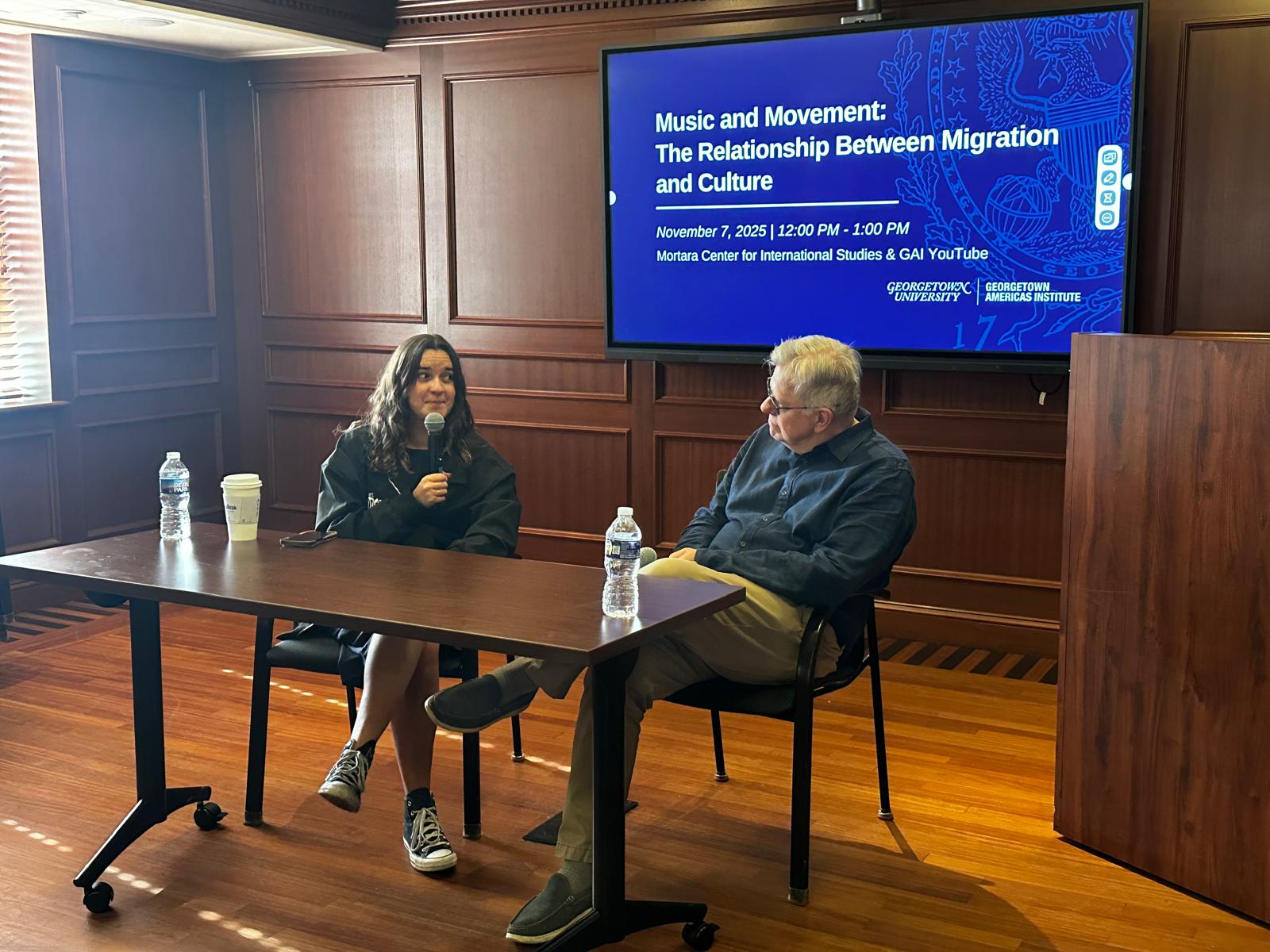
On November 7, the Georgetown Americas Institute welcomed Anamaria Sayre, co-host of Alt.Latino and a curator and producer for Tiny Desk, with moderator Andrew Selee, president of the Migration Policy Institute, for a dynamic conversation on Latin music, migration, and cultural belonging. The discussion explored the evolution of Latin music, transnational cultural flows, and how migration and music intersect to shape identity, belonging, and social influence across the Americas and beyond.
The Deep Roots of Musical Exchange
The conversation began with a historical perspective on musical exchange. Sayre emphasized that contemporary sounds—reggaetón, bachata, dembow, and cumbia—draw heavily on Afro-diasporic traditions and centuries of transatlantic cultural movement. Drawing on examples from artists like Angelique Kidjo and collaborations between Nigerian, Puerto Rican, and Jamaican musicians, Sayre highlighted how these musical dialogues illuminate shared histories and cultural spaces that transcend national borders. Selee complemented this perspective by examining the historical and social contexts that shape musical migration. He discussed how patterns of migration, labor, and diaspora have facilitated the spread and evolution of musical traditions, creating communities where culture becomes both identity and social cohesion.
Global Sounds and Creative Fluidity
Turning to contemporary artists, Sayre discussed genre-defying works like Rosalía’s latest album, recorded with the London Symphony Orchestra and sung in thirteen languages. She emphasized how such experimentation reflects the complex, hybrid nature of Latin music. Selee added a policy-oriented lens, highlighting how migration flows influence cultural production in host and home countries alike. He noted that Latinx communities in the U.S. often blend local and international sounds, contributing to the global ascent of Latin artists. This intersection of migration and music, Selee argued, demonstrates that cultural belonging is as much shaped by movement as by heritage.
Audience questions sparked a discussion about Bad Bunny’s global impact. Sayre explained that his influence stems from cultural relevance rather than spectacle. Beyond global hits and high-profile performances, she cited his role in Puerto Rico’s 2024 elections, where his support helped propel a previously little-known candidate from 1% to over 30% in the polls. Selee added that such examples illustrate how culture and migration can intersect to drive social change, with music acting as both reflection and mobilization.
Identity, Belonging, and the Realities of the Latino Experience
The conversation also addressed challenges facing Latino communities in the United States, including fear, immigration pressures, and discrimination. Sayre shared how immigrant children often depict “home” as a country they have never visited, highlighting emotional consequences of marginalization. Selee emphasized that these experiences are shaped by broader social and policy structures, which can either constrain or enable cultural expression. Yet both agreed that the current visibility and cultural prominence of Latino communities reflect resilience and progress.
Music as Reflection, Resistance, and Reconnection
Closing the discussion, Sayre framed music as an essential medium for self-expression and social reflection. “Successful cultural work is just successful reflection,” she said. “People want to be seen. Music does that. It always has, and it always will.” Selee noted that through migration, these musical expressions connect disparate communities, creating shared understanding and a sense of belonging that transcends borders.