


The Rise of Organized Crime and Political Realignment in Latin America
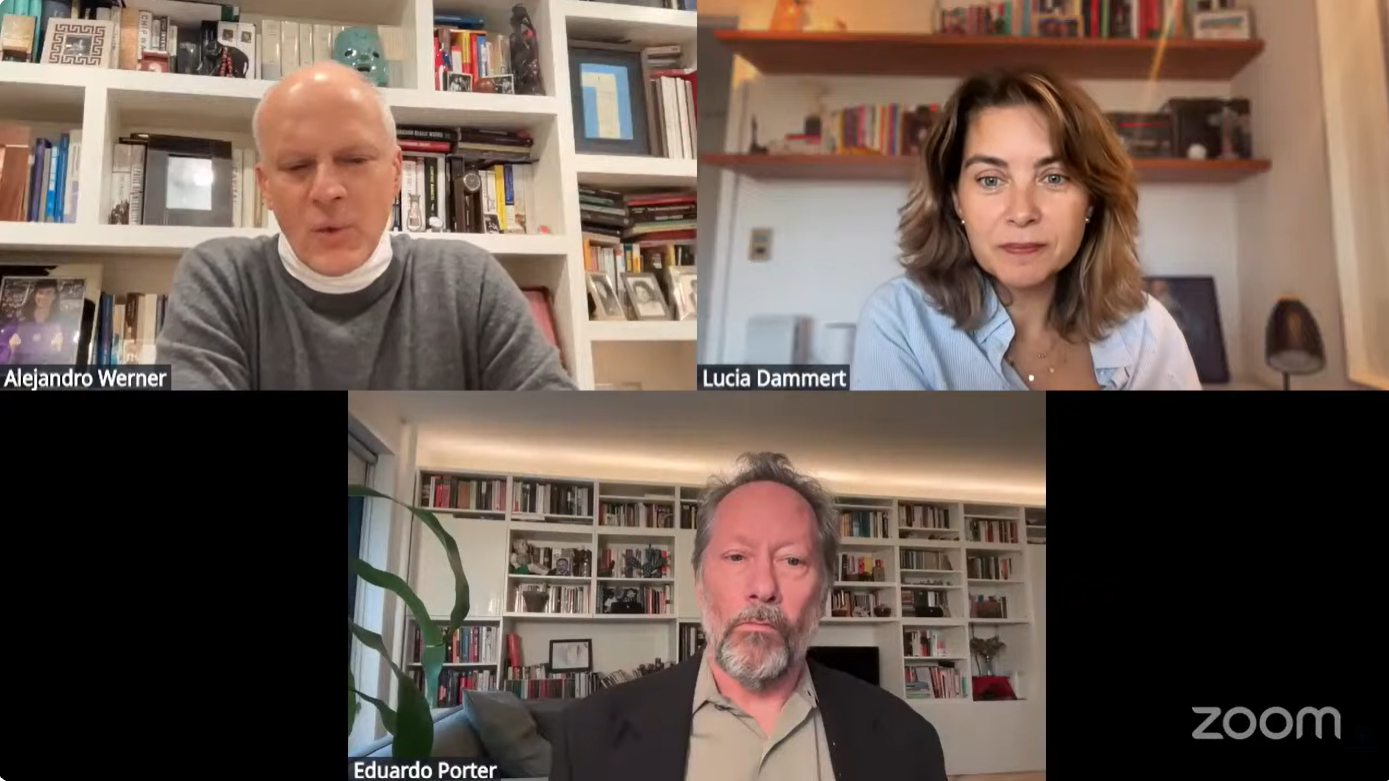
On March 3, 2026, the Georgetown Americas Institute hosted a virtual conversation on the evolving threat of organized crime and political realignment in Latin America as part of its series Latin America and the Geopolitical and Economic Transition: How to Harness the Revolution. The event featured Lucia Dammert, professor of international relations at Universidad de Santiago de Chile, an expert on public security, governance, and criminal networks. The session was moderated by Eduardo Porter, Guardian columnist and author of the Substack “Being There,” and Alejandro Werner, founding director of GAI.
The Shift from Drug Trafficking to Criminal Economies
Dammert described a fundamental transformation: organized crime in Latin America is no longer solely a drug problem. Organized crime groups have shifted into a range of illicit markets such as illegal gold mining, human trafficking, timber smuggling, and exotic animal trade, markets that now often generate higher earnings than illicit drugs. She mentioned that the COVID-19 pandemic accelerated this shift, specifically the expansion of extortion, which has become pervasive across the region.
Dammert explained that today there is an illegal market for almost every legal product; these are no longer structures just to move illicit drugs. Due to high demand, she argued that even if one criminal network is eliminated, another will emerge to fill the void. She identified three factors that have enabled this growth in organized crime: the flood of weapons into Latin America, the lack of enforcement against money laundering, and the deterioration of political institutions.
The State’s Relationship with Organized Crime
The conversation also touched upon the shifting relationship between organized crime and the state. Dammert challenged the popular view that organized crime thrives only in areas where state control is absent. Instead, she argued, organized crime also operates where the state is present, benefiting from alliances with local authorities, judges, and political figures. She argued that the state has a symbiotic relationship with illicit markets, only targeting the weakest links in the criminal chain. This relationship has led to a crisis of political legitimacy where citizens view politics and crime as indistinguishable from one another. Furthermore, she pointed to the increasing amount of extortion as the final straw eroding public tolerance.
“When your daily life begins to be managed by organizations of various kinds, whose identities you do not quite know, yet which stand menacingly before you, that is when democracy vanishes as a concept.” - Lucia Dammert
Fragmentation, Corruption, and the Bukele Model
Dammert then delved into the ways that the rise of organized crime is reshaping political systems across Latin America. Criminal groups are no longer financing political campaigns but are also seeking political power, specifically at the local and municipal levels. Simultaneously, voters, frustrated by insecurity, are leaning towards candidates who promise strict policies, regardless of their democratic ideals.
This rising dynamic, Dammert argued, has fueled the appeal of authoritarians such as President Nayib Bukele in El Salvador. She posited that Bukele recognized the depth of the Salvadoran political crisis and found a way to communicate and deliver results. Thus, for people who are extorted daily, Bukele’s model seems to excel. However, the challenge is how to achieve similar results within the rule of law.
Strategy for Change
For Dammert, Latin America’s response to organized crime has consisted of tough rhetoric but weak enforcement, and she called for a restructuring of priorities. Her first recommendation was to enact campaign finance transparency for politicians to sever the financial relationship between politicians and organized crime. Second, she emphasized the need for greater financial intelligence to combat money laundering, noting that organized crime has shifted toward cryptocurrencies and shell companies. Third, she urged a regional and hemispheric approach to arms trafficking, signaling the influx of weapons from the United States that fuels cartel violence and regular crime.
Dammert raised the importance of reforming specific sectors. She argued that certain illicit activities, such as illegal mining and logging, exist partly because legal channels are prohibitively bureaucratic. She believes that we need to think creatively about what regulation is truly needed in order to remove profit from organized crime.
Cooperation Amidst Distrust
Regarding regional cooperation to address transnational crime, Dammert noted that multilateral efforts have deteriorated amid bilateral approaches and increasing mistrust among national security agencies. With the United States focused on bilateral deals and Europe recently giving attention to the cocaine consumption crisis, she argued that Latin America lacks a clear road to a coordinated response. She concluded that right-wing governments could decide to act together on organized crime.
The panel concluded with a collective sense of urgency to combat organized crime in Latin America. Dammert emphasized that Latin America is at a crossroads. Without real investment in transparency, intelligence, and regulation, the region risks further democratic erosion as citizens decide to turn to authoritarian leaders promising order at any cost.