


Updating CODESPA’s Theory of Change
With the support of the Georgetown Americas Institute student grants, Juan Pablo Fernandez, Meryem Kosar, Eugene Kim, and Patricia Zoheir Samman traveled to Colombia to help an international development organization update its measurement and evaluation procedures.
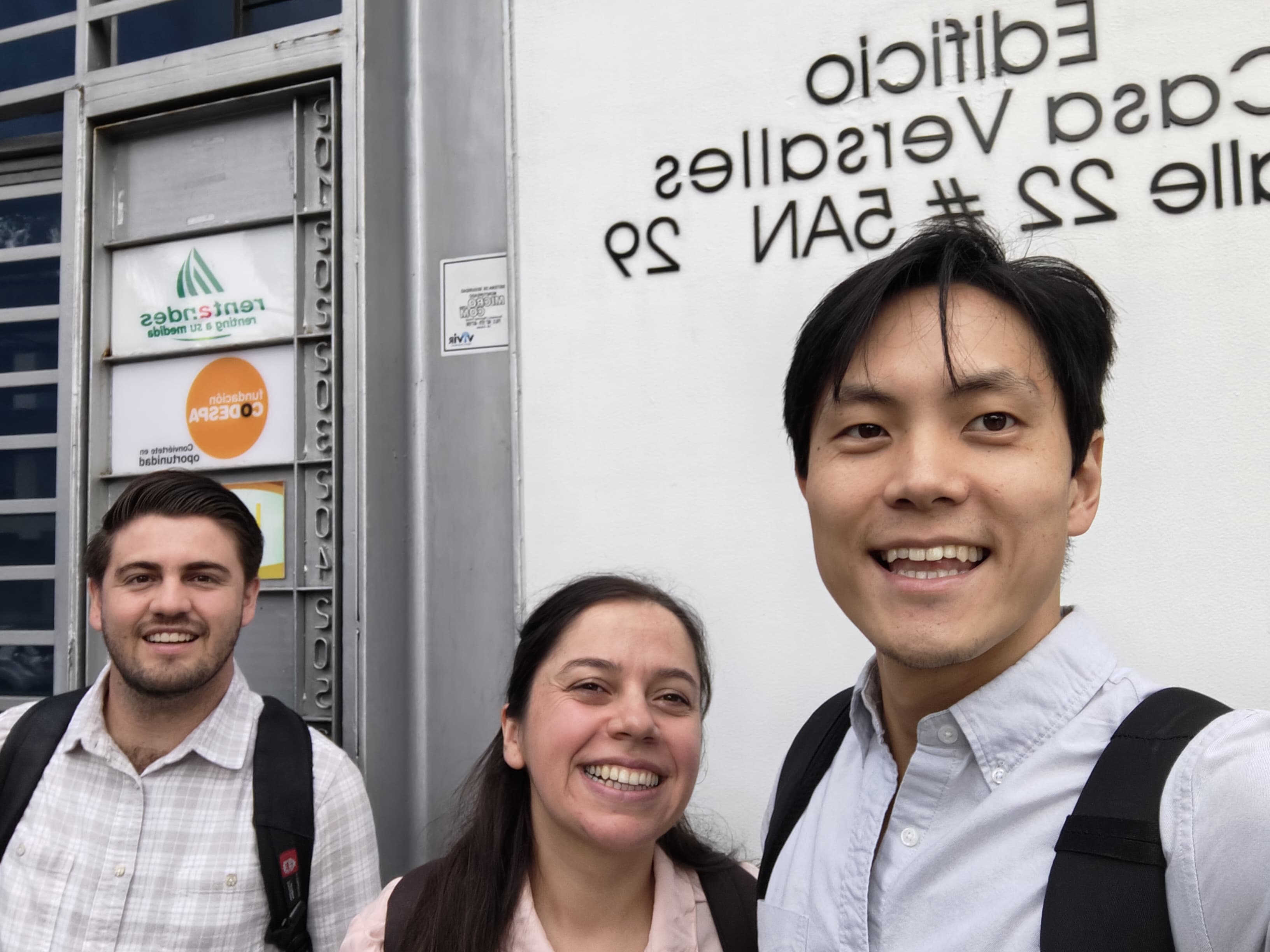
The MIDP capstone team was tasked with helping CODESPA, a Spain-based development organization, update its Theory of Change and establish global indicators to standardize reporting from its eleven delegations, most of which are in Latin America.
CODESPA’s Monitoring and Evaluation team selected its Colombia office as the candidate office to provide feedback about our proposed indicators and to pilot the survey instrument we developed based on these co-developed indicators. They also intended to meet with program participants in CODESPA’s projects related to coffee production and conversion of sugarcane waste into biomass energy.
Over the first two days, they presented a proposal and co-developed the indicators. Due to security issues that emerged the weekend they arrived, such as attacks on military bases and reports of bombs placed on roads, they did not go to the field locations where they originally intended to pilot the surveys.
Instead, they pivoted to observing interviews virtually and were able to see how program beneficiaries responded to their surveys, which informed what changes they needed to make to the wording and format of their survey. They were also encouraged to see that tools, such as the Poverty Probability Index developed by Innovations for Poverty Action, indeed seemed relevant for the organization’s measurement goals based on the data they collected.
As a result of this project, the organization now has a survey instrument validated in one of its country offices that can be disseminated to other offices, thus taking a step forward toward achieving its measurement goals. It was enlightening to merge the Colombia team’s extensive field knowledge and experience with our theoretical research. Without this trip, they would have been unable to sufficiently account for the granular nuances of local contexts while developing the indicators and survey.